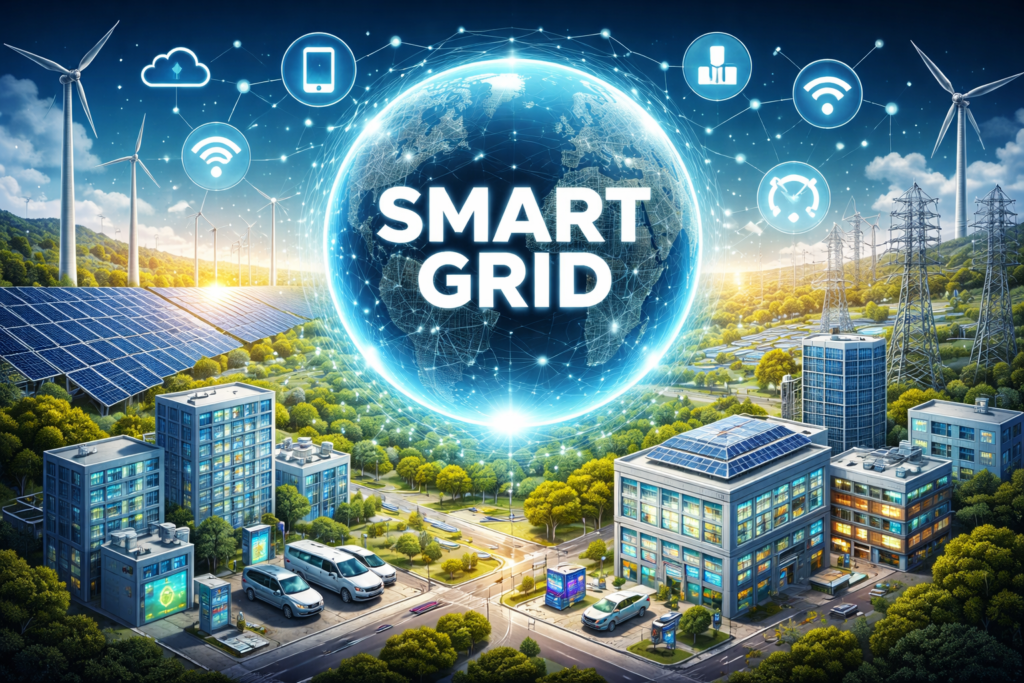
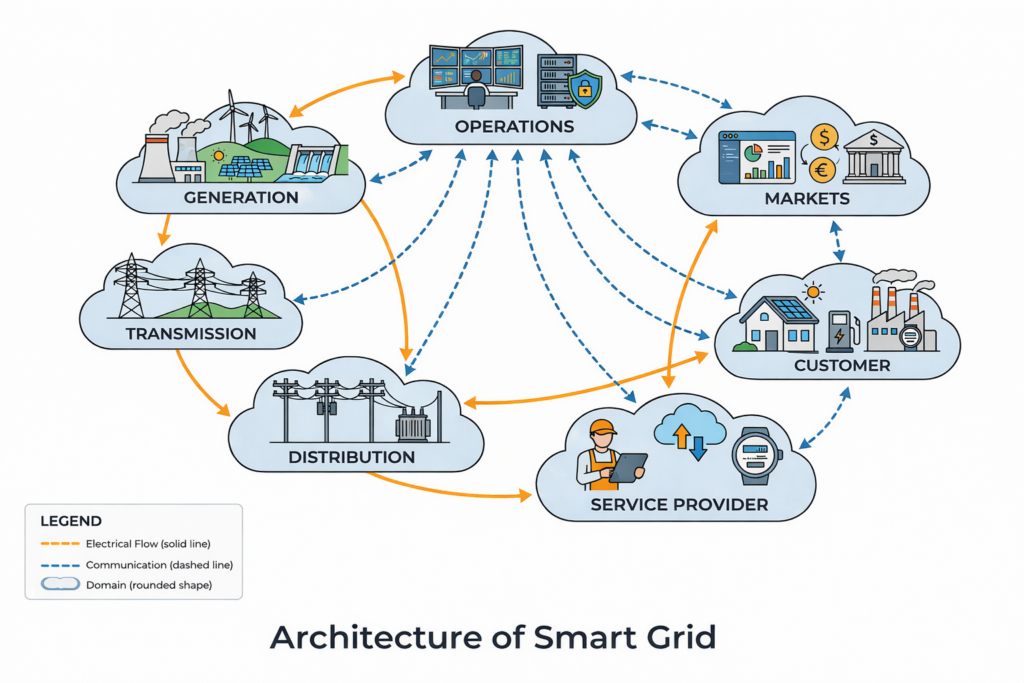
A smart grid uses advanced digital technologies to make the electrical power system more efficient, reliable, flexible, and intelligent. Below are the key technologies of smart grid system.
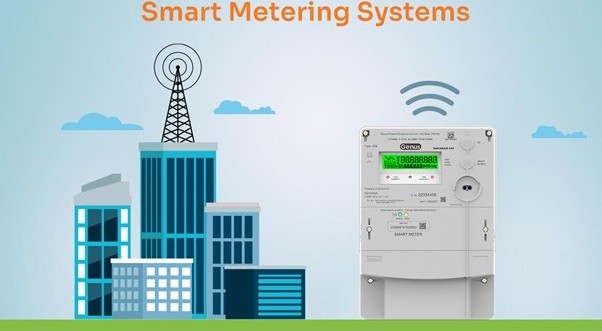
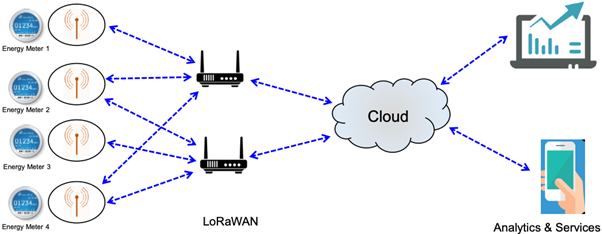
1. Advanced Metering Infrastructure (AMI)
- Smart meters at consumer end
- Two-way communication between utility and consumer
- Enables real-time energy monitoring, dynamic pricing, and remote billing
2. Communication Technologies
Used for fast and secure data exchange:
- Fiber Optic Communication
- RF Mesh Networks
- PLC (Power Line Communication)
- 5G / LTE / IoT networks
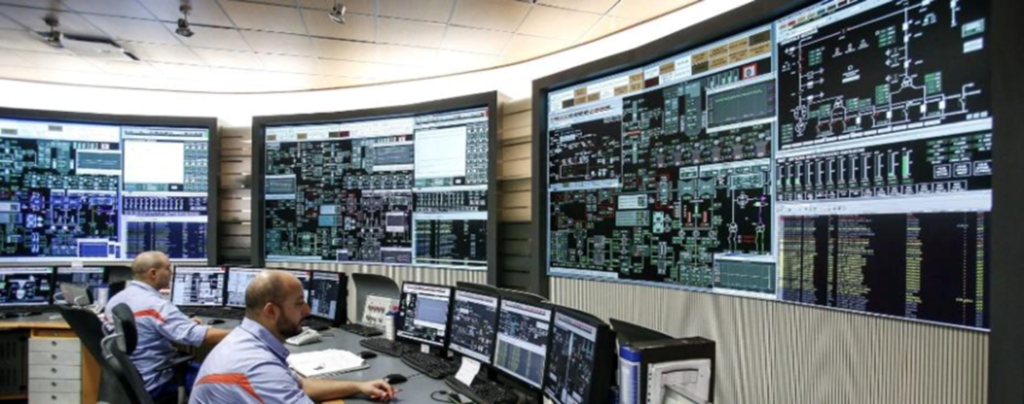
3. Supervisory Control and Data Acquisition (SCADA)
- Real-time monitoring and control of grid components
- Fault detection and quick restoration
- Widely used in substations and control centers
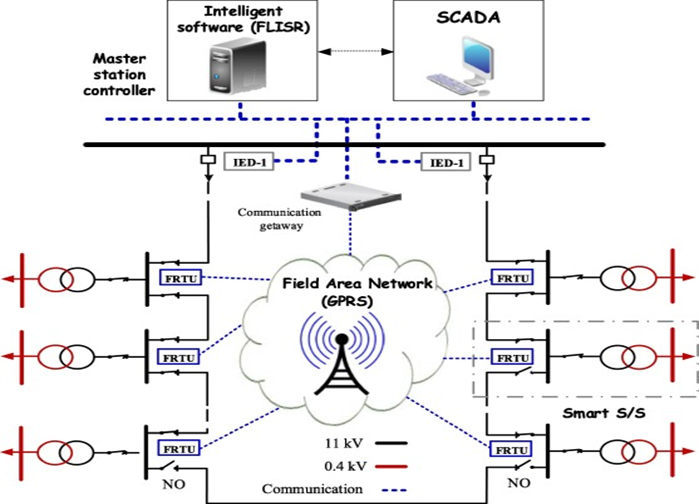
4. Distribution Automation (DA)
- Automatic switching and fault isolation
- Self-healing capability
- Reduces power outage duration
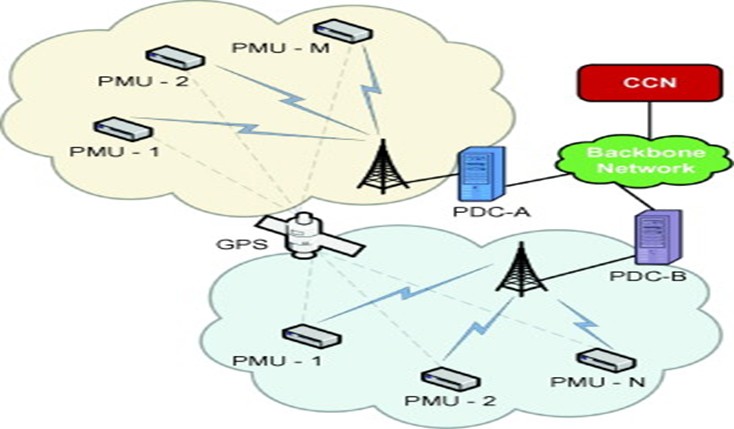
5. Wide Area Measurement System (WAMS)
- Uses PMUs (Phasor Measurement Units)
- Measures voltage, current, frequency in real time
- Enhances grid stability and reliability.
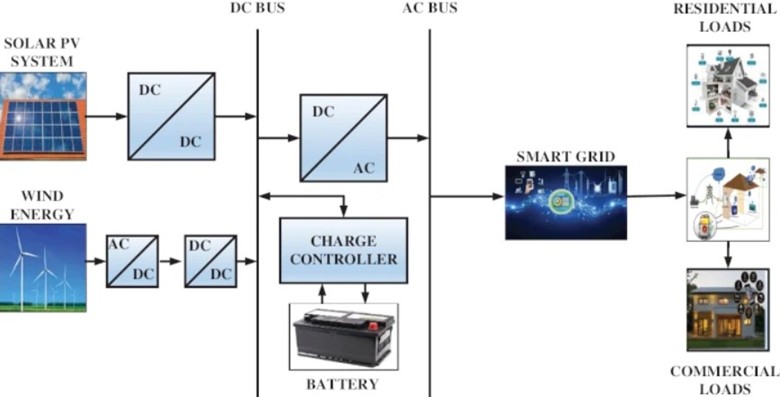
6. Renewable Energy Integration Technologies
- Integration of solar, wind, biomass
- Smart inverters and power electronics
- Supports Distributed Energy Resources (DERs)
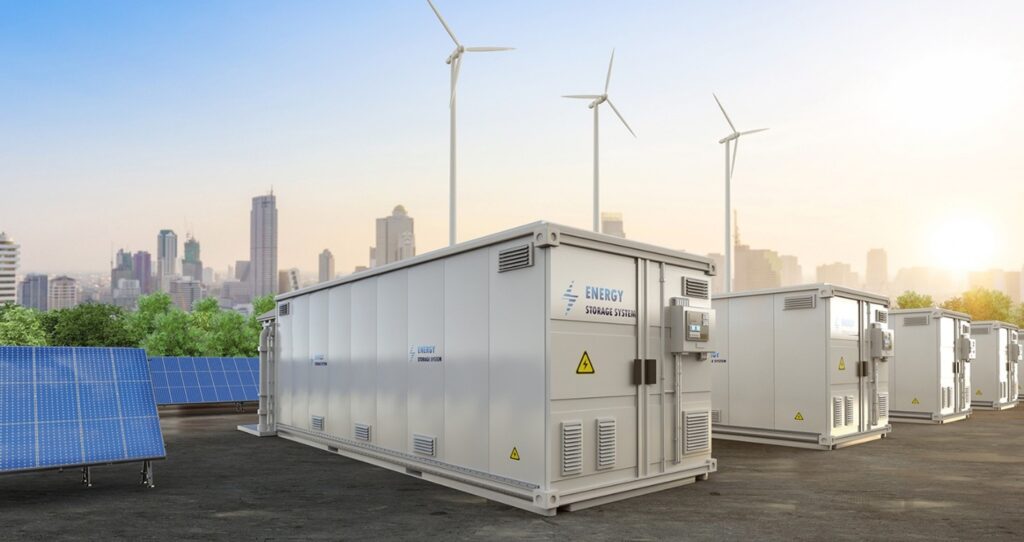
7. Energy Storage Systems
- Batteries (Li-ion), flywheels, supercapacitors
- Peak load management
- Improves power quality and reliability
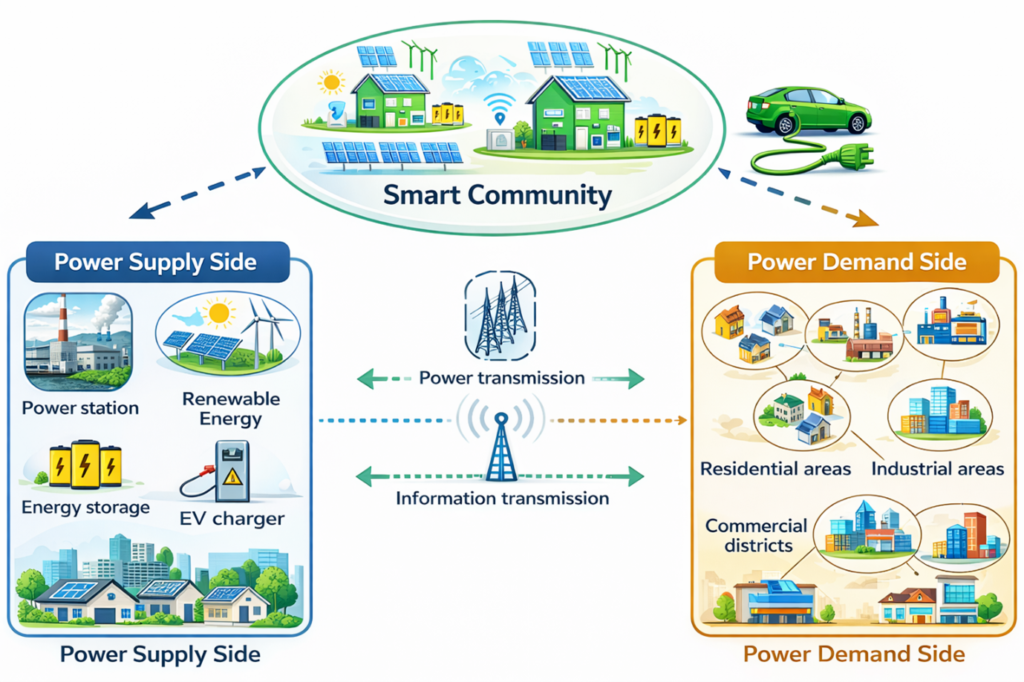
8. Demand Response (DR) Technology
- Consumers adjust usage during peak demand
- Automated load control
- Reduces stress on the grid
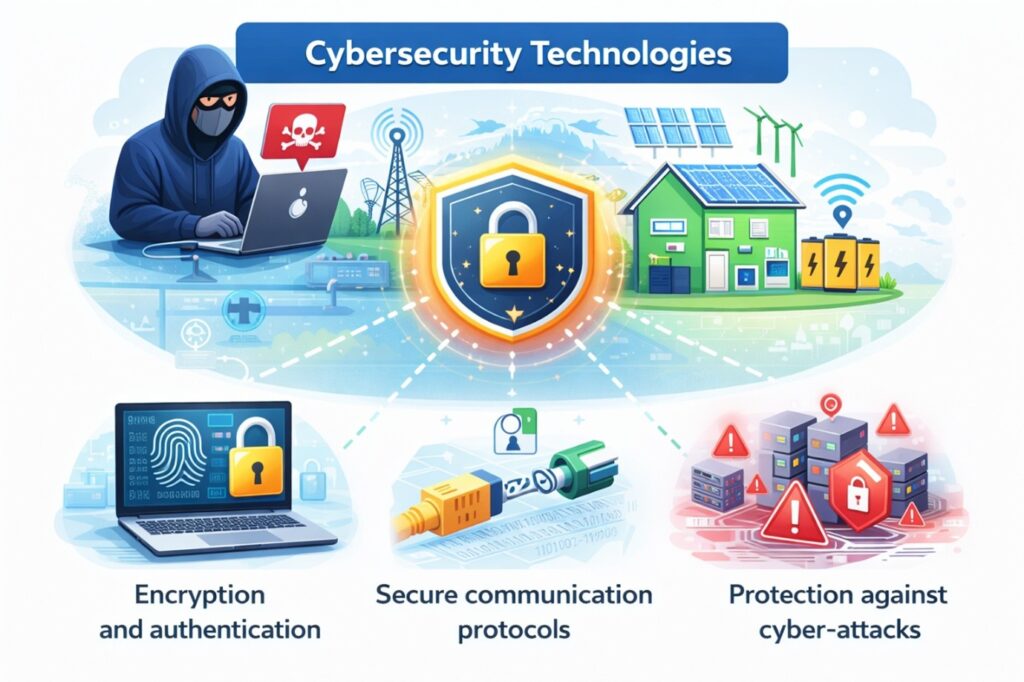
9. Cybersecurity Technologies
- Encryption and authentication
- Secure communication protocols
- Protection against cyber-attacks
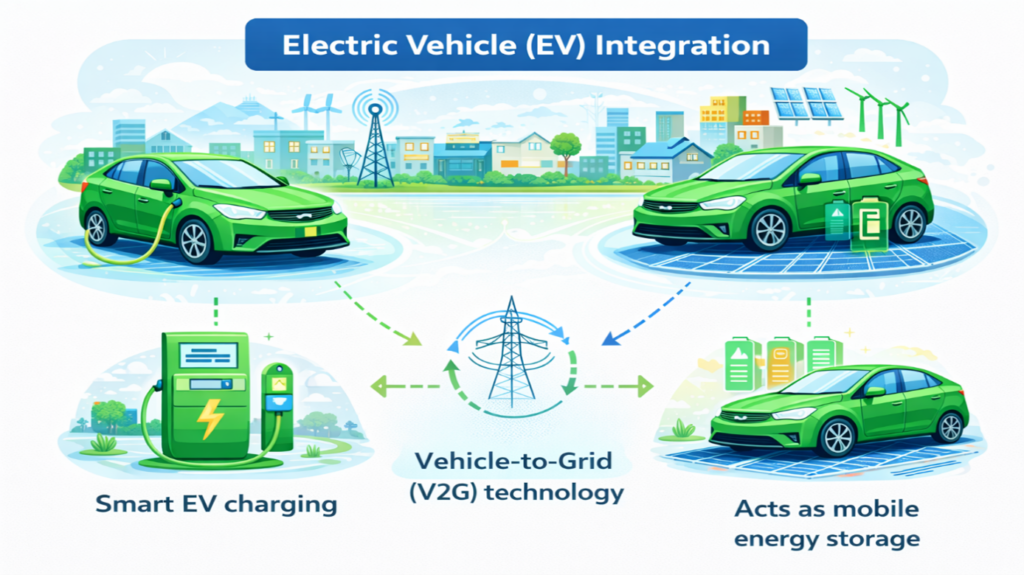
10. Electric Vehicle (EV) Integration
- Smart EV charging
- Vehicle-to-Grid (V2G) technology
- Acts as mobile energy storage