
Introduction
The economics of power generation deals with how electrical energy is produced, managed, and supplied in the most reliable and cost-effective manner. Engineers must understand different technical terms and plant classifications to design an efficient power system that meets consumer demand without unnecessary wastage or high cost.
Important Terms Used in Power System Economics
1. Connected Load
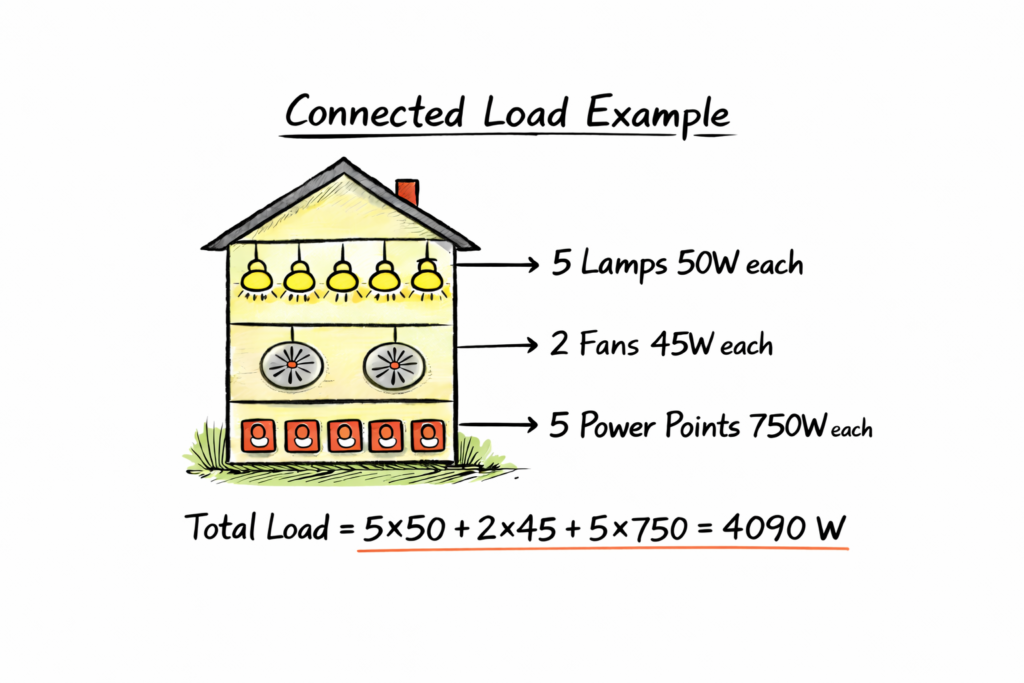
Connected load is the total rated power of all electrical appliances connected to a power supply system.
🔹 In simple words, it means how much electrical load is installed, not how much is actually used.
Example:
If a house has:
- 5 lamps of 50 W
- 2 fans of 45 W
- 5 power sockets of 750 W
Then,
Connected Load = (5×50) + (2×45) + (5×750) = 4090 W
The sum of connected loads of all consumers gives the connected load of a substation or generating station.
2. Firm Power
Firm power is the amount of power that a generating station can guarantee continuously under normal operating conditions.
🔹 It represents reliable power that is always available to meet base demand.
🔹 Firm power is especially important for industries, hospitals, and essential services.

3. Cold Reserve
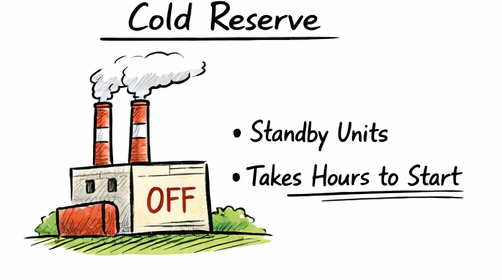
Cold reserve refers to generating units that are not running and not connected to the grid but can be started when required.
🔹 These units take several hours to become operational
🔹 Used during emergencies or sudden long-term load increase
Think of cold reserve as a backup generator kept switched off.
4. Hot Reserve
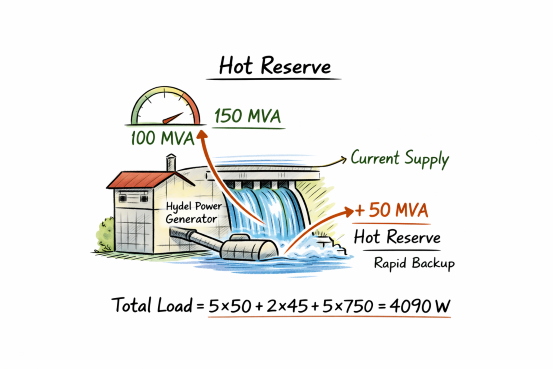
Hot reserve is the extra power capacity that can be supplied almost immediately from a running generator.
Example:
If a 150 MVA hydro generator is currently supplying 100 MVA,
then remaining 50 MVA is hot reserve.
🔹 Power can be increased quickly by adjusting turbine controls
🔹 Very useful during sudden load variations
5. Spinning Reserve
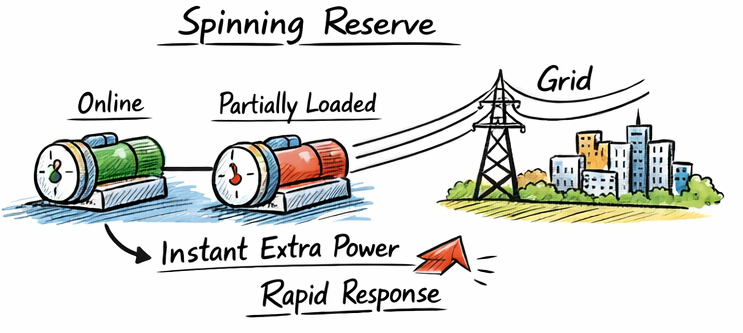
Spinning reserve is the power capacity that is:
- Already running
- Connected to the grid
- But not fully loaded
🔹 It can respond within seconds
🔹 Helps maintain system stability during generator failure or load spikes
Types of Power Plants Based on Load Demand
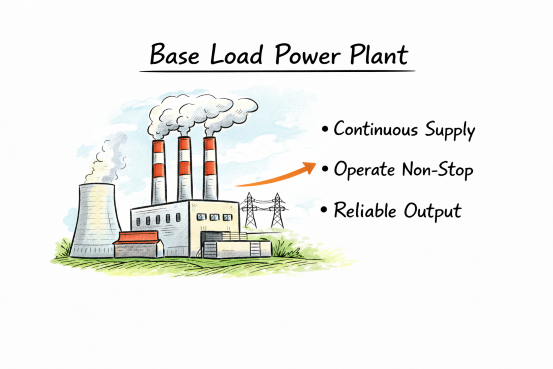
1.Base Load Power Plants
Base load plants supply the minimum continuous demand of the power system.
Features:
- Operate 24/7
- Low cost per unit of electricity
- High efficiency at full load
- Large capacity plants
Examples:
- Coal-fired power plants
- Nuclear power plants
- Large hydroelectric stations
🔹 These plants are not designed for frequent start-stop operation.
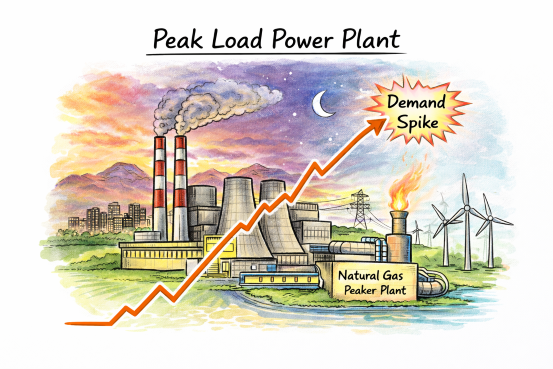
2. Peak Load Power Plants
Peak load plants operate during short periods of high demand, such as evenings or industrial peak hours.
Features:
- Fast start-up capability
- Higher cost per unit
- Best efficiency at 50–75% load
- Smaller capacity
Examples:
- Gas turbine plants
- Diesel power plants
- Solar and wind plants (availability-based)
Thank you sir