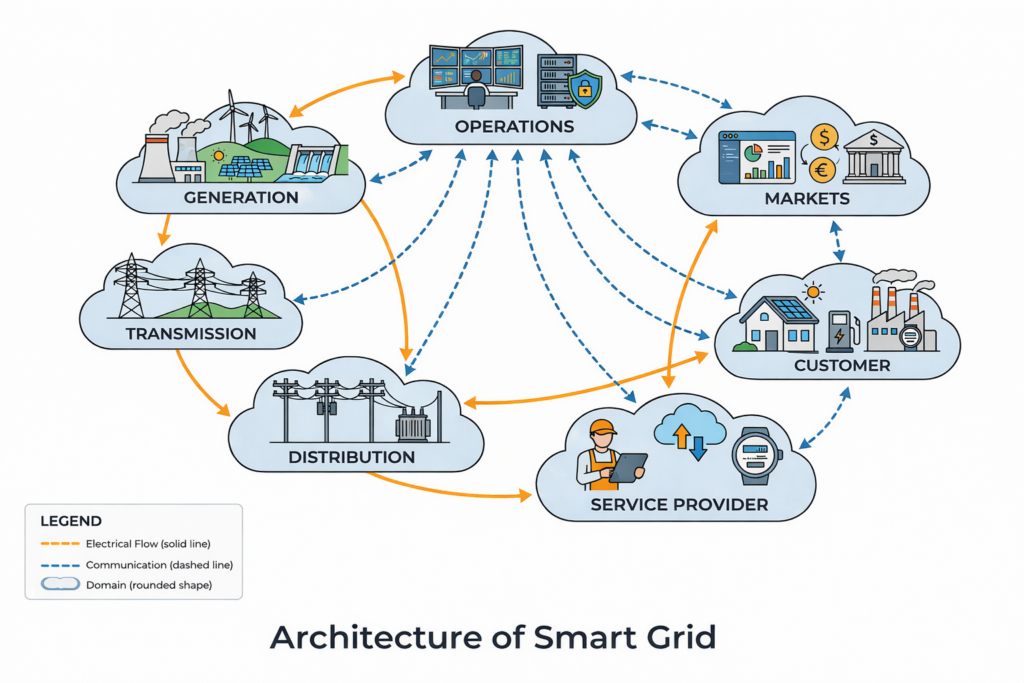
The smart grid architecture is broadly divided into seven major domains:
- Bulk Generation
- Transmission System
- Distribution System
- Customer
- Markets
- Operations
- Service Provider
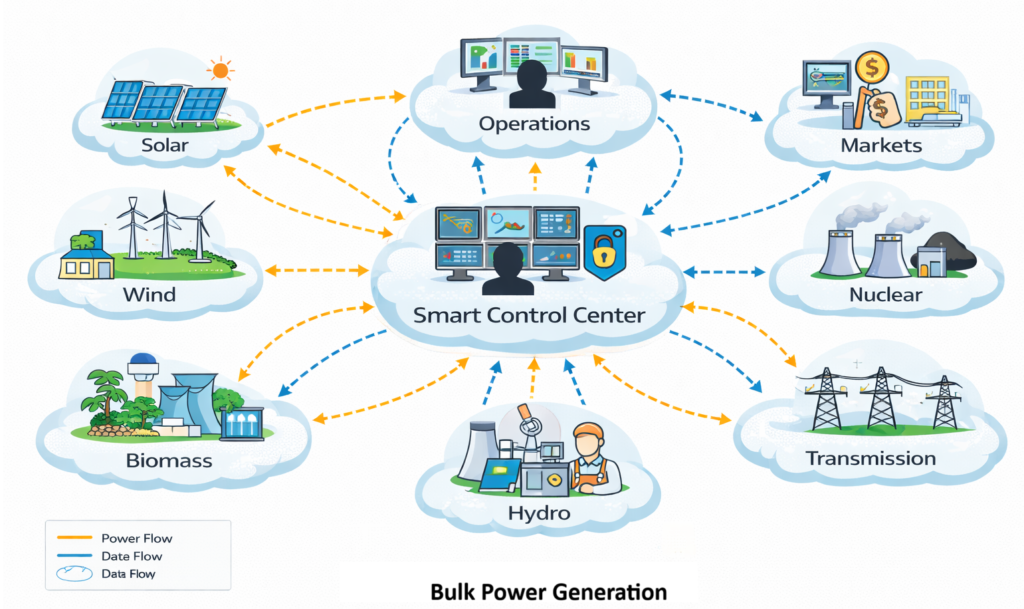
1. Bulk Generation
Bulk generation refers to large-scale power production from renewable and non-renewable energy sources.
- Power generation from coal, hydro, nuclear, solar, wind, biomass, geothermal, etc.
- Different energy sources operate together in a coordinated manner.
- Wide Area Measurement System (WAMS) helps monitor system stability.
- Continuous communication with:
- Transmission network
- System operator
- Power markets
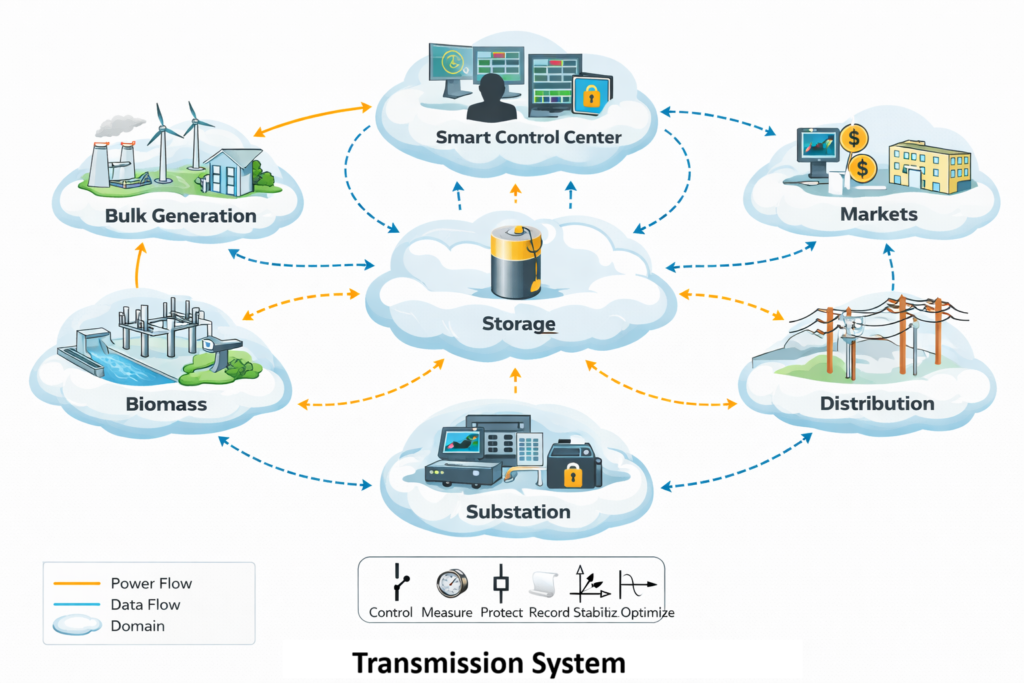
2. Transmission System
The transmission system carries electricity over long distances using high-voltage lines.
Transmission System Characteristics
- Uses real-time monitoring devices like Phasor Measurement Units (PMUs).
- Voltage and power flow are continuously controlled.
- Communication exists between:
- Bulk generation
- Distribution system
- System operator
- Electricity markets
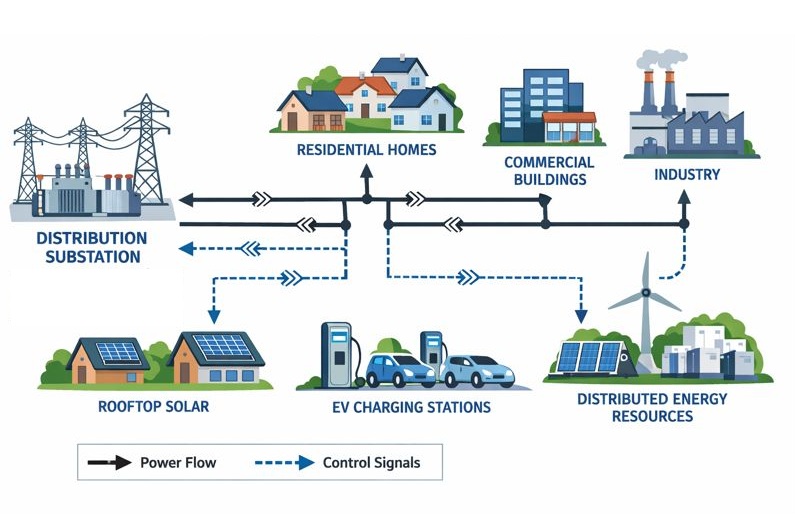
3. Distribution System in Smart Grid
The distribution system delivers power from substations directly to consumers.
Smart Distribution Characteristics:
- Substation automation and distribution automation
- Integration of Distributed Energy Resources (DERs) like rooftop solar
- Remote monitoring using Distribution Management System (DMS)
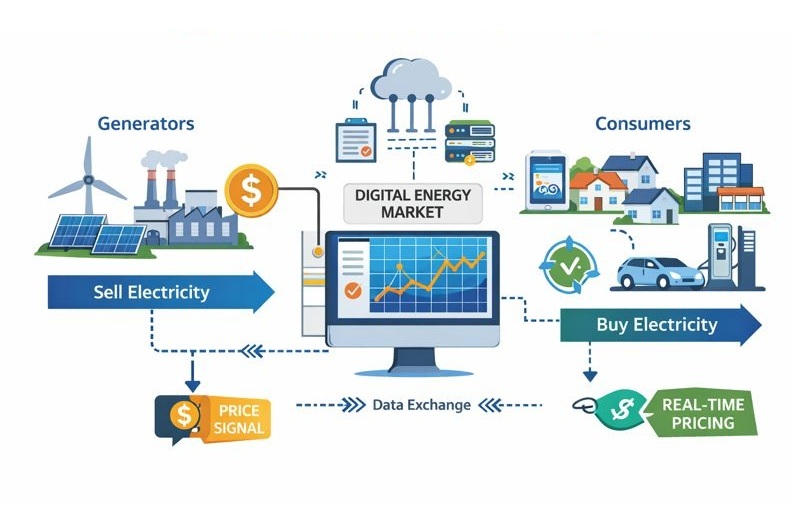
4. Markets in Smart Grid
The smart grid enables an intelligent electricity market
Market Characteristics :
- Real-time electricity pricing
- Online access to market data
- Integration of:
- Generation
- Transmission
- Distribution
- Consumers
- Service providers
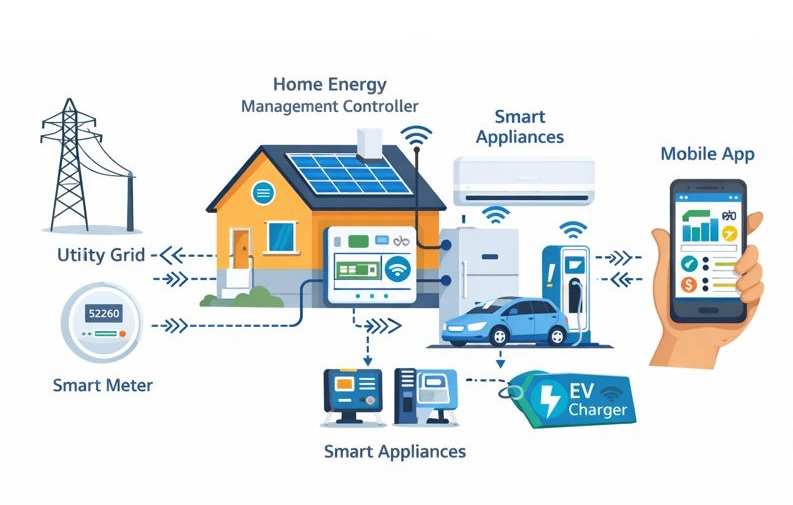
5. Customer Domain in Smart Grid
Customers are no longer passive users—they actively participate in the grid.
Customer domain characteristics :
- Real-time energy usage data with the help of smart meter.
- Better energy management through real time energy pricing through smart meter.
- Helps to cut or reduced electricity bills by shifting loads when power congestion in power system is low.
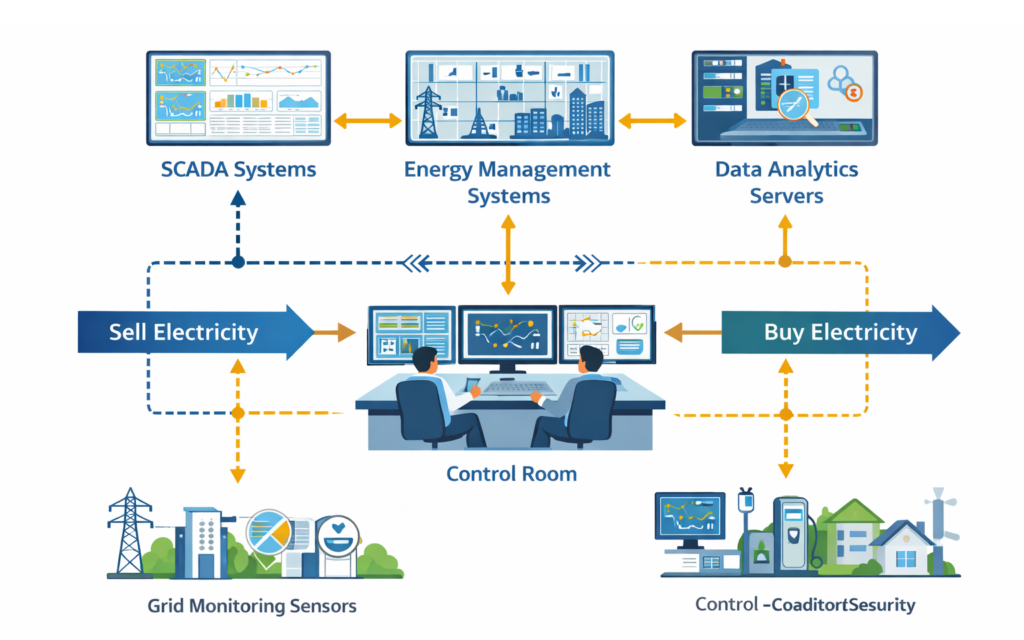
6. Operations Domain
The operations domain ensures overall grid reliability and efficiency.
Operation Domains Characteristics :
- Network monitoring using SCADA and Energy Management Systems (EMS) for real-time grid visibility.
- Fault detection and isolation enabled by SCADA and EMS to quickly identify and resolve grid disturbances.
- Load control managed through EMS with support from data analytics platforms for demand optimization.
- Data analysis and reporting performed using data analytics platforms integrated with SCADA/EMS data.
- Asset and maintenance management supported by data analytics platforms leveraging operational data from SCADA systems.
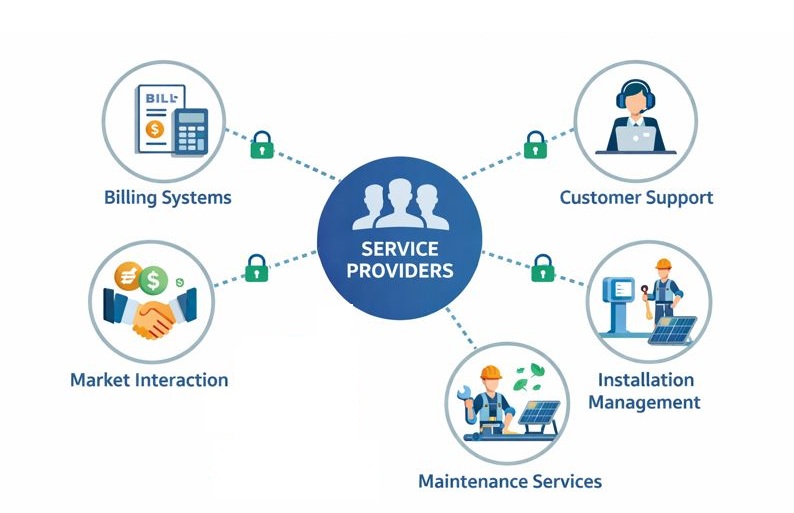
7. Service Provider Domain
Service providers act as a bridge between:
- Operations
- Customers
- Markets
Service Providers Characteristics :
- Billing and account management
- Installation and maintenance
- Customer support
- Emerging energy services